Telescope Mounts & Tripods
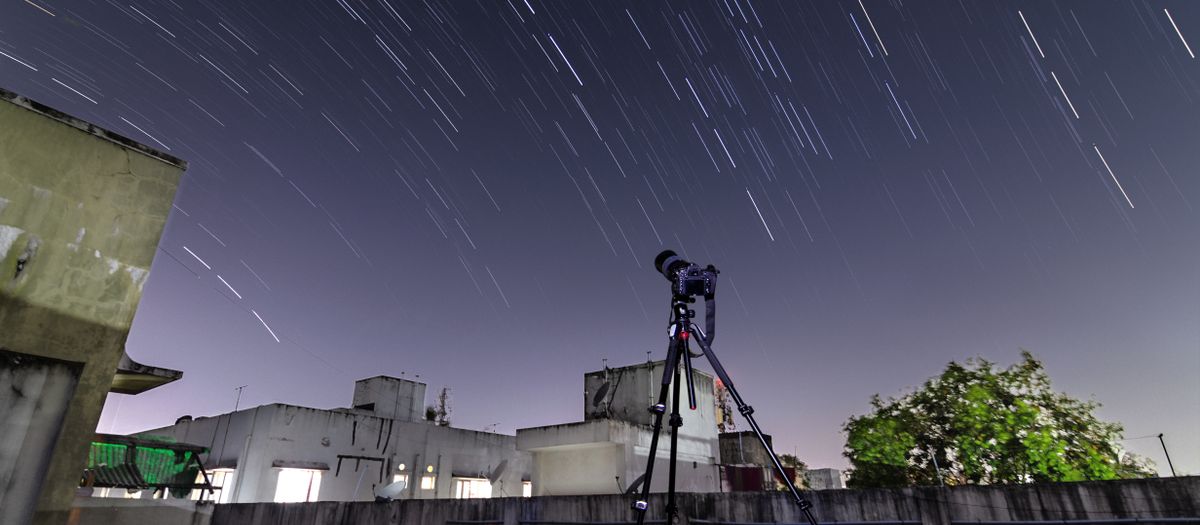
A wobbly tripod ruins more first nights than bad optics do. The mount is the steady base that holds your scope still enough to actually see anything, and it is the piece beginners underrate most. This silo compares the mount types — alt-azimuth, equatorial (EQ) and GoTo — explains what a tripod actually needs to hold, and shows when a mount upgrade is worth the money. Specs are verified against manufacturer and current Amazon listings.
Alt-azimuth — the simplest to point
An alt-azimuth (alt-az) mount moves on two simple axes: up-down (altitude) and left-right (azimuth), exactly like a photo tripod. There is nothing to align and nothing to think about — you nudge the scope at what you want to see, and you are looking at it. That makes it the friendliest mount for a first scope, and it is precisely what a Dobsonian's rocker base is: a big, stable alt-az mount built right into the telescope. The one thing an alt-az does not do on its own is track the sky, so objects drift out of view and you re-nudge every minute or two — no problem for visual observing, a limitation for long-exposure imaging.
Equatorial (EQ) — built to track the sky
An equatorial mount is tilted so one of its axes points at the celestial pole, lining it up with the Earth's rotation. Once it is set to your latitude and roughly polar-aligned, you can follow any object across the sky by turning a single slow-motion knob — or a small motor does it for you. That tracking is why equatorial mounts are the foundation of nearly every astrophotography setup. The trade-off is a real learning curve: EQ mounts feel unintuitive at first, they are heavier, and they need that polar alignment each session. For pure visual beginners they are often more mount than the night calls for.
GoTo — the computer finds it for you
A GoTo mount is motorized and carries a hand controller or phone app. After a short alignment on a couple of bright stars, you pick a target from a database and the mount slews straight to it, then tracks it. GoTo removes the star-hopping learning curve, which is a genuine help under light-polluted skies where the guidepost stars are washed out. The costs are honest ones: a higher price, batteries or a power pack, and a setup routine every night. My club view is that GoTo is money well spent for someone short on dark skies or patience, and money better put into aperture for someone who enjoys learning the sky.
What a tripod actually needs to hold
Whatever the type, the spec that decides whether a mount is any good is payload — the weight it can carry steadily, with margin to spare. A mount loaded right to its rated limit shakes at the lightest touch of the focuser; the same scope on a mount carrying well under its limit stays rock-solid. Always size up: pick a mount rated for noticeably more than your scope and accessories weigh. After payload, look at the height range (so you are not stooping or tip-toeing) and the head type. A wobbly tripod ruins more first nights than bad optics do, which is why the mount deserves a real slice of your budget rather than the leftovers.
Featured guides
The current published guides in this silo. More land each batch.
Landing next: Telescope mount types, Equatorial mount guide, Alt-az versus equatorial, and Best GoTo mount.
Frequently asked questions
What is the difference between an alt-azimuth and an equatorial mount?
An alt-azimuth mount moves up-down and left-right like a camera tripod, which is intuitive and quick to use. An equatorial mount is tilted to your latitude so a single axis follows the sky's rotation, keeping objects centred with one knob. Alt-az is friendlier for visual beginners; equatorial is the basis of most astrophotography setups.
Do I need a separate mount for a Dobsonian telescope?
No. A Dobsonian already includes its mount — the simple rocker base it sits on is an alt-azimuth mount built into the design. That is part of why Dobsonians are such good value: you are not paying separately for a tripod and head. Refractors and tube reflectors are the scopes that need a separate mount bought to match.
How much weight should a telescope mount hold?
Look at the payload rating and leave yourself margin — a mount loaded right to its limit shakes, while one carrying well under its rating stays rock-solid. As a rule of thumb, choose a mount rated for noticeably more than your telescope and accessories weigh. For visual use, comfortable headroom matters more than the maximum number on the box.
Is a GoTo mount worth it for a beginner?
It depends on your skies and patience. A GoTo mount slews to objects automatically, which is a real help under light pollution or when time is short. But it costs more and spends part of your budget on electronics instead of a steadier, larger mount or scope. Many beginners are happier learning the sky on a simple manual mount first.