Telescope Types for Beginners
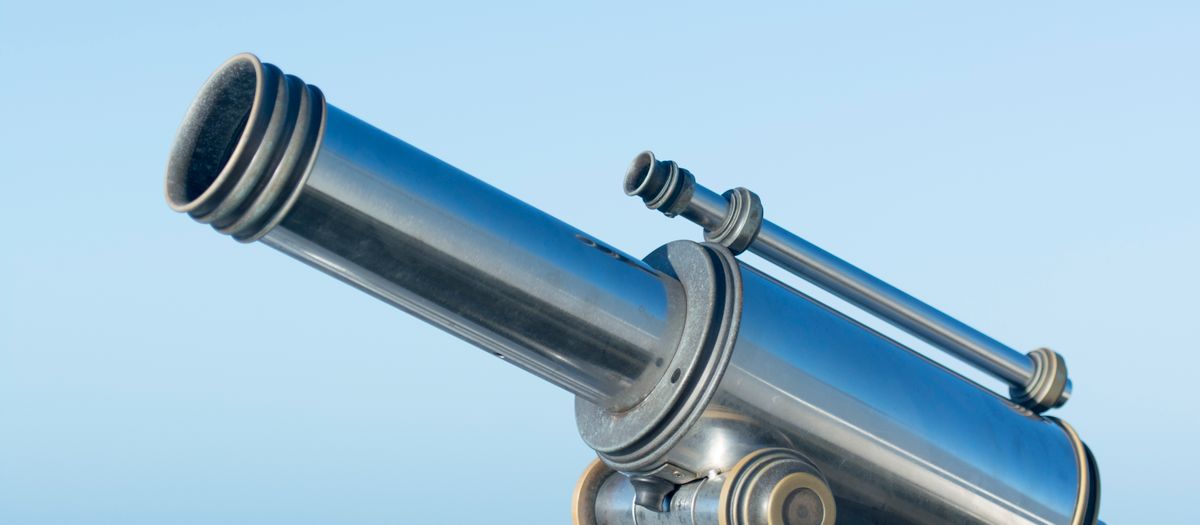
The telescope is the biggest decision of your first setup, and the one people overthink most. This silo compares the four types a beginner will hear about — Dobsonian, refractor, Newtonian reflector and compound (SCT / Maksutov) — then sorts out manual versus computerized GoTo and the aperture-first logic that should drive the whole choice. Specs are verified against manufacturer and current Amazon listings; no hands-on testing is claimed.
Aperture first, type second
Before you compare types, settle the one spec that decides everything else: aperture, the width of the main mirror or lens. It sets how much light the scope gathers and how much fine detail it can resolve — it is the number worth spending your money on. Magnification, by contrast, is almost free and badly misunderstood: the useful ceiling is only about twice the aperture in millimetres, which is exactly why a cheap "600x" box is selling power its tiny lens can never deliver. If you only learn one rule, make it this one, and the beginner's guide spends a whole section on why. The What Can I See calculator turns any aperture into the planets, lunar detail and deep-sky objects it will actually show you.
Dobsonian — the beginner favourite
A Dobsonian is a Newtonian reflector mounted on a simple, sturdy rocker base that swings up-down and left-right. Because that base is cheap to build, almost all of the price goes into the mirror — which is why a Dobsonian puts more aperture per dollar in front of your eye than any other design. A 6- or 8-inch Dob shows the Moon, planets and the brighter clusters, nebulae and galaxies genuinely well, sets up in seconds, and needs no alignment to start. Its trade-offs are honest ones: it does not track the sky for you, and the larger sizes are bulky to carry outside. This is the workhorse I keep, and for most beginners it is the right default. The dobsonian telescope case is made in full in the pillar guide.
Refractor — the grab-and-go
A refractor is the classic long lens-in-a-tube. It needs almost no maintenance, never needs its optics collimated, and delivers crisp, high-contrast views that are lovely on the Moon, double stars and wide star fields. The catch is cost: aperture in a refractor gets expensive fast, so beginner refractors are usually small, in the 60–100mm range. A small refractor on a steady mount makes a fine first telescope if portability and simplicity matter more to you than pulling in faint galaxies — it is the scope you grab for a quick ten-minute look.
Newtonian reflector — value on a tripod
A Newtonian reflector uses the same mirror optics as a Dobsonian but rides on a tripod-and-head mount, often an equatorial one that can track the sky's motion. You get more aperture for the money than a refractor, with two trade-offs: the mirrors need occasional collimation (a quick alignment you learn in minutes), and the mount adds cost and setup time. It is a sensible middle path for someone who wants reflector value but also wants tracking — which is also why a reflector pairs naturally with the right telescope mount.
Compound — SCT and Maksutov
Compound (catadioptric) scopes fold the light path using both a mirror and a corrector lens. Schmidt-Cassegrains (SCTs) and Maksutov-Cassegrains pack a long focal length into a short, portable tube, which makes them excellent on the Moon and planets and popular on computerized GoTo mounts. They cost more per inch of aperture than a reflector and take longer to cool to the night air, so they are less of a pure-value first pick — but they are compact and capable, and a common choice once a beginner wants a GoTo all-rounder.
Manual versus computerized GoTo
The last fork is how you find things. A manual scope you point yourself, star-hopping from bright stars to fainter targets — cheaper, battery-free, and the fastest way to actually learn the night sky. A computerized GoTo slews to objects for you after a short alignment, which is a genuine help under light-polluted skies or when your time is short. My honest take, and a regular debate at my club: for a first scope on a budget, manual wins, because every dollar on a motor is a dollar off the aperture. But if star-hopping sounds like a chore rather than a game, GoTo earns its keep. There is no wrong answer — only a trade-off between learning the sky and letting the scope do it.
Featured guides
The current published guides in this silo. More land each batch.
Landing next: Dobsonian telescope guide, Schmidt-Cassegrain explained, Best telescope to see planets, and Computerized versus manual telescopes.
Frequently asked questions
What type of telescope is best for a beginner?
For most beginners a Dobsonian — a Newtonian reflector on a simple rocker base — is the best value, because it puts the most aperture per dollar on a stable mount. A small refractor is the alternative if portability and zero maintenance matter more to you than chasing faint deep-sky objects.
Is a Dobsonian a reflector or a refractor?
A Dobsonian is a reflector. It uses the same Newtonian mirror optics as a tube-on-tripod reflector, but it sits on a simple ground-based rocker mount instead of a tripod. That cheap, sturdy base is why so much of the price goes into the mirror, which is what gives a Dobsonian its bang-for-buck reputation.
What is the difference between a reflector and a refractor telescope?
A refractor uses a lens at the front to gather light; a reflector uses a mirror at the back. Refractors are low-maintenance and give crisp, contrasty views but get expensive at larger apertures. Reflectors give more aperture per dollar and need occasional mirror alignment (collimation). For deep-sky reach on a budget, reflectors win.
Do I need a computerized GoTo telescope?
No — plenty of beginners do beautifully with a manual scope and learn the sky by star-hopping. A computerized GoTo finds objects for you, which helps under light-polluted skies or when time is short, but it costs more and spends part of your budget on electronics instead of aperture. It is a convenience, not a requirement.