Best Telescope Tripods
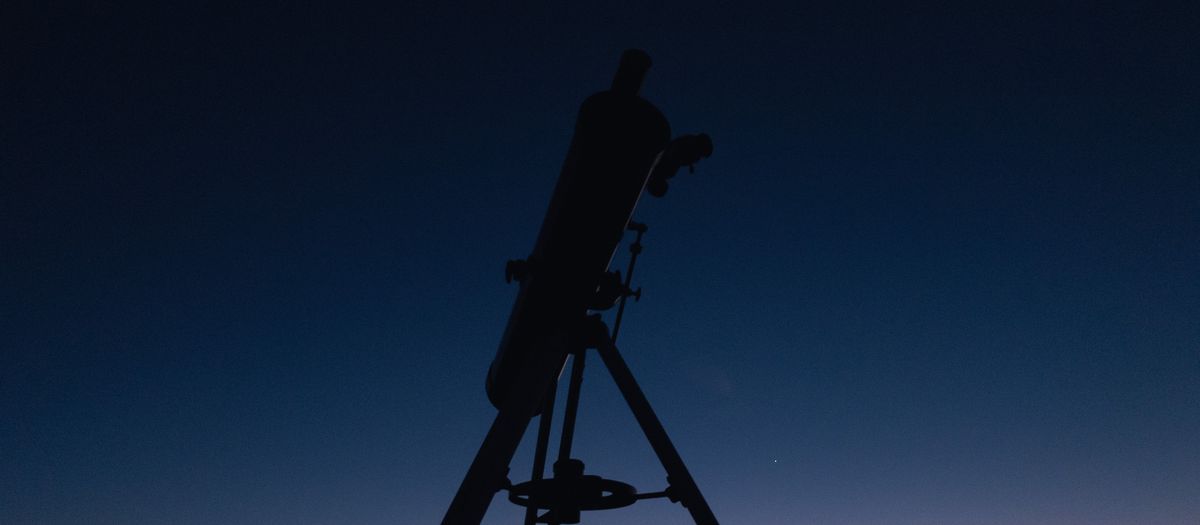
A telescope is only as good as the base it sits on. A wobbly tripod swings the Moon out of view every time you touch the focuser, and it is the single most common reason a first night disappoints — a wobbly tripod ruins more first nights than bad optics do. This guide compares beginner tripods and mounts on the specs that decide steadiness — type, payload, height range, head and weight — across five categories: best overall, best budget, best alt-azimuth mount, best equatorial mount and best phone-adapter add-on. The verified picks appear in each slot once real product data is in.
A note on how to read this. There is no single "best" mount for everyone — the right one depends on what scope it has to carry, whether you only observe or also want to image, and how far you have to lug it. So the value here is the framework: what each spec changes, so you can match a steady base to your scope. In fifteen years at the eyepiece, the lesson that comes up most often at our star parties is that beginners under-spend on the mount and over-spend on power — and the mount is what they end up cursing.
Specs verified against manufacturer details and current Amazon listings — no hands-on testing claims, just the figures and the trade-offs that decide the fit. Payload and stability figures are read from published manufacturer specifications.
How to choose a mount or tripod
A few specs decide whether a mount holds your scope steady. These are exactly the columns in the comparison below.
Type — alt-azimuth, equatorial or GoTo
The type sets how the mount moves and what it can do. An alt-azimuth (alt-az) mount swings up-down and left-right like a camera tripod — the most intuitive way to point a scope, and ideal for visual observing. An equatorial (EQ) mount tilts one axis to match the sky's rotation, so after polar alignment a single slow-motion knob keeps an object centred as the Earth turns; that tracking ability is what makes long-exposure imaging possible, at the cost of a counterweight and a setup routine. GoTo adds motors and a controller that slew automatically to catalogued objects, layered on either an alt-az or EQ base. For pure visual use, alt-az is the easy start; the mounts hub works through the trade-offs in depth.
Payload — the headroom that keeps the view still
Payload is the weight the mount carries steadily, and it is the spec that most directly decides whether the image shakes. Crucially, the rated number is usually the maximum where the mount still holds the scope up, not where it stays rock-steady — so for visual use you want your scope plus accessories to sit well under the rating, around 80% or less, and lower still for imaging. A mount loaded to its limit gives the slow, sickly wobble that makes a planet impossible to focus; one with real headroom damps vibration in a second or two. When in doubt, buy more payload than you think you need.
Height range, head and weight
Height range decides whether you observe standing comfortably or hunched over — most beginner tripods top out around 50–60 inches at the head, and a tripod set a little lower and wider is always steadier. The head and its slow-motion controls decide how smoothly you can nudge an object and follow it across the sky; jerky friction controls make high-power tracking a chore. Finally, the mount's own weight is the portability trade-off: a heavy steel tripod is rock-solid but stays put, while a lighter aluminium one travels easily but needs a lighter scope to stay steady. Match the base to both your scope and how far you carry it.
The tripods and mounts compared
A short list of widely available beginner mounts and tripods, compared on the specs above. Specs are verified against manufacturer details and current Amazon listings — no hands-on testing claims, just the figures and the trade-offs that decide the fit.
| Best for | Type | Payload | Height range | Head | Weight |
|---|---|---|---|---|---|
| Best overall | Equatorial tracker | Not listed | Not listed | Polar alignment EQ base | Not listed |
| Best budget | Equatorial tracker + tripod | Not listed | Not listed | EQ GoTo head | Not listed |
| Best alt-azimuth mount | Alt-azimuth GoTo | 11 lbs | Not listed | Alt-azimuth (motorized) | Not listed |
| Best equatorial mount | Compact equatorial tracker | Not listed | Not listed | EQ base (polar alignment) | Not listed |
| Best phone-adapter add-on | Phone adapter accessory | N/A | N/A | Clamp (28–47 mm eyepiece fit) | Not listed |
Our top picks
Best overall: Sky-Watcher Star Adventurer 2i Pro Pack – All-in-One Motorized Equatorial Mount for Astrophotography

Best overall
Sky-Watcher Star Adventurer 2i Pro Pack – All-in-One Motorized Equatorial Mount for Astrophotography
Sky-Watcher
- Type: Equatorial tracker
- Payload: Not listed
- Height range: Not listed
- Head: Polar alignment EQ base
- Weight: Not listed
- GoTo: No (manual polar + SynScan app)
The Sky-Watcher Star Adventurer 2i Pro Pack is the most capable compact equatorial tracker on Amazon US — motorised sidereal tracking with WiFi and a polar scope for guided astrophotography from any location.
Price as of Oct 10, 2026, 12:44 UTC — details
Prices and availability are accurate as of the date/time indicated and are subject to change. Any price and availability information displayed on Amazon at the time of purchase will apply.
Last checked 2026-06-14
Best budget: Explore Scientific iEXOS-100-2 PMC-Eight GoTo Equatorial Tracker with WiFi & Bluetooth

Best budget
Explore Scientific iEXOS-100-2 PMC-Eight GoTo Equatorial Tracker with WiFi & Bluetooth
Explore Scientific
- Type: Equatorial tracker + tripod
- Payload: Not listed
- Height range: Not listed
- Head: EQ GoTo head
- Weight: Not listed
- GoTo: Yes (ExploreStars app, WiFi + BT)
The iEXOS-100-2 combines a GoTo equatorial head, tripod, and PMC-Eight controller in one package — one of the most affordable motorised EQ tracking setups with app-based object finding.
Price as of Oct 10, 2026, 12:44 UTC — details
Prices and availability are accurate as of the date/time indicated and are subject to change. Any price and availability information displayed on Amazon at the time of purchase will apply.
Last checked 2026-06-14
Best alt-azimuth mount: Sky-Watcher AZ-GTi WiFi Alt-Azimuth GoTo Mount with SkyMax 102 Maksutov-Cassegrain

Best alt-azimuth mount
Sky-Watcher AZ-GTi WiFi Alt-Azimuth GoTo Mount with SkyMax 102 Maksutov-Cassegrain
Sky-Watcher
- Type: Alt-azimuth GoTo
- Payload: 11 lbs
- Height range: Not listed
- Head: Alt-azimuth (motorized)
- Weight: Not listed
- GoTo: Yes (SynScan WiFi app)
The Sky-Watcher AZ-GTi pairs an 11-lb-payload WiFi GoTo alt-azimuth mount with a SkyMax 102 Maksutov, offering one-touch object finding and tracking without the complexity of polar alignment.
Price as of Oct 10, 2026, 12:44 UTC — details
Prices and availability are accurate as of the date/time indicated and are subject to change. Any price and availability information displayed on Amazon at the time of purchase will apply.
Last checked 2026-06-14
Best equatorial mount: Sky-Watcher Star Adventurer Mini Pro Pack Motorized Equatorial Mount

Best equatorial mount
Sky-Watcher Star Adventurer Mini Pro Pack Motorized Equatorial Mount
Sky-Watcher
- Type: Compact equatorial tracker
- Payload: Not listed
- Height range: Not listed
- Head: EQ base (polar alignment)
- Weight: Not listed
- GoTo: No (WiFi SynScan app tracking)
The Sky-Watcher Star Adventurer Mini Pro Pack is an ultra-compact equatorial tracker designed for mirrorless cameras and small refractors, offering sidereal and solar/lunar tracking in a 500g head that fits in a jacket pocket.
Price as of Oct 10, 2026, 12:44 UTC — details
Prices and availability are accurate as of the date/time indicated and are subject to change. Any price and availability information displayed on Amazon at the time of purchase will apply.
Last checked 2026-06-14
Best phone-adapter add-on: GOSKY Universal Cell Phone Adapter Mount - Compatible Binocular Monocular Spotting Scope Telescope and Microscope - Fits almost all Smartphone

Best phone-adapter add-on
GOSKY Universal Cell Phone Adapter Mount - Compatible Binocular Monocular Spotting Scope Telescope and Microscope - Fits almost all Smartphone
GOSKY
- Type: Phone adapter accessory
- Payload: N/A
- Height range: N/A
- Head: Clamp (28–47 mm eyepiece fit)
- Weight: Not listed
- GoTo: N/A
The GOSKY smartphone adapter clamps onto any eyepiece between 28–47mm in diameter and holds your phone over the lens for afocal photography — the cheapest way to capture moon and planet shots through any telescope.
Price as of Oct 10, 2026, 12:44 UTC — details
Prices and availability are accurate as of the date/time indicated and are subject to change. Any price and availability information displayed on Amazon at the time of purchase will apply.
Last checked 2026-06-14
Who should buy what
The visual observer who wants it simple
The best overall and best alt-azimuth mount slots point the same way: a sturdy alt-az mount with smooth slow-motion controls and clear payload headroom over your scope. Spec-by-spec this is the easiest base to point, the fastest to set up, and the one least likely to frustrate a beginner — there is no polar alignment, no counterweight, just up-down and left-right.
The trade-off is that an alt-az mount cannot track the sky on a single axis, so at high power you nudge two controls to follow a planet, and it is not suited to long-exposure imaging. For visual observing of the Moon, planets and bright deep-sky objects, that is a non-issue — which is why it is the base most beginners at my club are happiest on.
The tight budget — spend on stability, not features
The best budget slot is about putting your money into the part that keeps the image still: legs and a head rated comfortably above your scope's weight. A cheap mount that is solid for a small scope beats an ambitious one loaded to its limit, because steadiness comes from headroom, not from a long spec sheet.
What you give up at the budget end is usually slow-motion smoothness and GoTo convenience. That is a fair trade for a beginner — a steady manual mount you can point by hand teaches you the sky and never runs out of battery. Add the convenience features later, once you know you are staying in the hobby.
The future imager — start equatorial
The best equatorial mount slot is for anyone who already knows they want to photograph the night sky. An EQ mount's tracking axis is the foundation of astrophotography: align it to the celestial pole and it can follow a star for a long exposure, which an alt-az simply cannot do. Buy more payload capacity than your scope needs, because imaging punishes a mount far harder than visual use does.
The cost is complexity and weight: polar alignment, a counterweight bar, and a heavier setup to carry. For pure visual observing that overhead is unnecessary, but if imaging is the goal it is the right first investment — and it feeds straight into the best telescope for astrophotography guide.
The casual phone photographer — add an adapter
The best phone-adapter add-on slot is the cheapest possible entry to capturing what you see. A phone adapter clamps your phone over the eyepiece and holds the camera lens centred and steady, which turns shaky hand-held attempts into sharp snapshots of the Moon and bright planets.
It will not do deep-sky imaging — that needs a tracking mount and a dedicated camera — but for lunar and bright-planet shots it is a fun, low-cost first step that works with the scope and mount you already own. Pair it with a steady mount, because even a phone shot reveals every wobble in the base.
The mount mistakes that ruin a first night
A few avoidable errors are behind most disappointing first nights, and every one is a buying or setup decision rather than bad luck. The biggest is under-buying the mount: pairing a capable scope with a base rated barely above its weight, so the whole assembly trembles at the lightest touch. The fix is headroom — buy a mount comfortably above your scope's weight, so the image settles in a second instead of swimming for ten.
The second is over-extending the tripod. Cranking the centre column and legs to full height feels convenient, but it turns the tripod into a tuning fork — the higher and thinner the legs, the more it vibrates. Set the legs as low as comfortable viewing allows, splay them properly, and let the mass sit low. The third is placing the tripod on soft ground — grass and decking flex underfoot, so each footstep nudges the view. A patio slab, a paving stone under each foot, or a driveway gives the steady footing the mount needs.
The last is ignoring slow-motion controls. A mount you have to shove by hand to follow a planet at high power is a constant fight; smooth, geared slow-motion knobs (or a GoTo's tracking) keep the target centred while you focus and observe. None of these cost much to get right at the buying stage — and getting them right is most of what separates a steady night from a frustrating one.
What pairs with the mount
A steady mount sits between the scope and the sky. Make sure it matches your best telescope for beginners shortlist, and if you plan to image, a tracking mount feeds straight into best telescope for astrophotography. Wondering what any setup will show you? Try the What Can I See calculator.
Frequently asked questions
Why does the tripod or mount matter so much?
Because a shaky mount makes even good optics useless. At high magnification the view is magnified and so is every vibration — at 150x, a tiny tap on the focuser swings the planet clean out of view, and the image takes seconds to settle each time. A steady mount with payload headroom keeps the image rock-solid, which is why a good base ruins fewer first nights than poor optics do. Verified picks land here once real data is in.
Alt-azimuth or equatorial for a beginner?
Alt-azimuth (alt-az) is simpler — it moves up-down and left-right like a camera tripod, which is intuitive for visual observing and quick to set up. Equatorial (EQ) mounts have one axis aligned to the sky's rotation, so a single slow-motion knob tracks an object as the Earth turns; that makes them the basis of astrophotography, but they need polar alignment and a counterweight, which is a learning curve. Most beginners start happily on alt-az for visual use and only move to equatorial when they want to image.
How much payload headroom should a mount have?
For visual observing, aim for a mount rated for clearly more than your scope and accessories weigh — a common rule of thumb is to use no more than about 80% of the rated payload, and less for imaging. The reason is that the rated number is usually a maximum where the mount still holds, not where it stays steady. Loading a mount to its limit is exactly how you get the slow, sickly wobble that makes a planet impossible to focus.
Can I put my telescope on a regular camera tripod?
Only a very small, light one — and even then with caution. Most photo tripods are built for a few pounds of camera, not a telescope tube and its leverage, so a typical scope overloads the head and shakes. Spotting scopes and the smallest grab-and-go refractors can ride a sturdy photo tripod with a proper head, but anything larger needs a purpose-built telescope mount with the payload rating and slow-motion controls to match.
What is a GoTo mount, and do I need one?
A GoTo mount has motors and a hand controller (or app) that, after a short alignment on a couple of bright stars, slews automatically to any object in its database. It is genuinely useful under light-polluted skies where finding faint objects by eye is hard, and for anyone who values convenience. You do not need one — a manual mount with smooth slow-motion controls is perfectly good and cheaper — but GoTo removes the "I can't find anything" frustration that ends a lot of first nights.
Do I need a phone adapter to photograph through my telescope?
For casual snapshots of the Moon and bright planets, yes — a phone adapter clamps your phone over the eyepiece and holds the camera lens centred, which is far steadier than trying to hand-hold it. It is the cheapest possible entry to astrophotography and a fun first step. It will not do deep-sky imaging, which needs a tracking mount and a dedicated camera, but for the Moon it is a great little add-on.
What height should a telescope tripod be?
Tall enough that you can reach the eyepiece without hunching, but not so tall that the legs splay wide and lose rigidity. Most beginner tripods extend to around 50–60 inches at the head; you want the object you observe most — often near the horizon for planets — to sit at a comfortable standing or seated height. A tripod set lower and wider is steadier, so do not extend the legs further than you need.