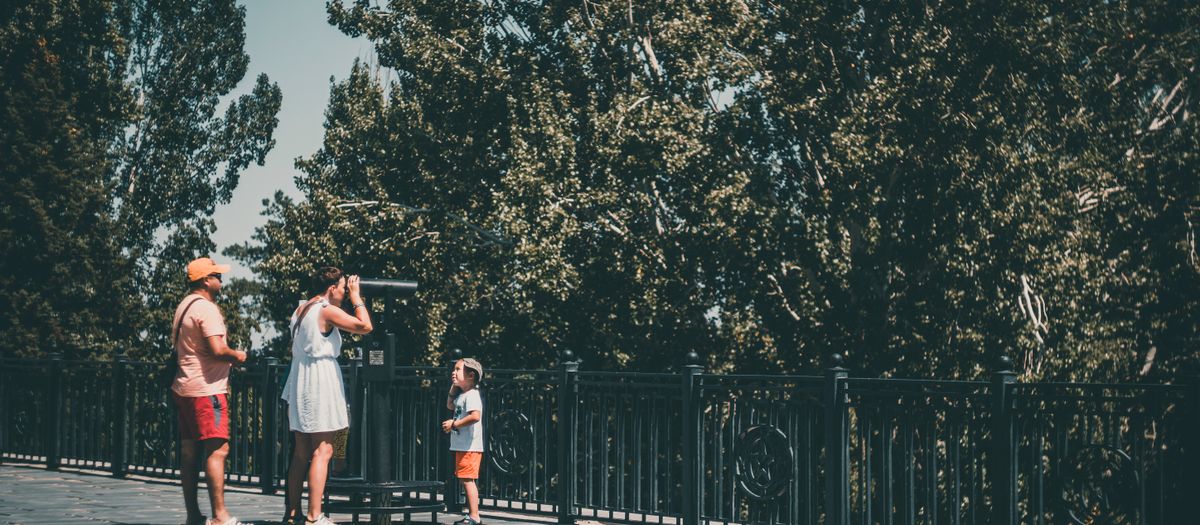
A telescope is one of the most popular gifts for a kid who likes space — and one of the fastest to end up in a closet. I’ve watched it happen at club nights more times than I can count: an excited family, a brand-new scope, and a kid who’s bored and cold within ten minutes. I made some of the same mistakes with my own kids before I figured out what actually works. Here’s the honest version.
The short lesson: kids don’t care about telescopes. They care about seeing something amazing, and they have zero patience for the part in between. Your whole job is to get them from “let’s go outside” to “whoa” as fast as possible, and to quit while they still want more.
Start with the Moon, every single time
If there’s one rule, it’s this: a kid’s first look should be the Moon. Not a faint galaxy, not a “you have to use your imagination” smudge — the Moon, big and bright and bristling with craters.
Why? Because it’s instant and it’s obvious. There’s no “do you see it?” guessing game. They put their eye to the eyepiece and a world full of craters and mountains is right there, sharp and undeniable. Every kid I’ve shown the Moon to has had the same reaction — a gasp, then a flood of questions. It works because it doesn’t require any acquired skill at seeing faint detail. It just looks incredible to anyone.
Catch the Moon a few nights from full, when the shadows are long and the craters look three-dimensional, and you’ve got a guaranteed win. The Moon is the gateway drug of the night sky and it never misses.
Then Saturn, the showstopper
After the Moon, if it’s up, go for Saturn. The rings are the other guaranteed whoa. Kids know what Saturn is “supposed” to look like from cartoons and books, and seeing the real thing — small, sharp, and genuinely ringed — short-circuits something in their brain. “Wait, that’s real? Right now?” Yes. That one lands every time.
Jupiter with its four moons is a strong third — kids love that the little dots are moons and that they move night to night. Between the Moon, Saturn, and Jupiter you have three bulletproof targets that don’t need dark skies or patience. That’s plenty. You do not need a fourth.
The mistakes I made first
Learn from my early flops:
I aimed too faint, too soon. My first instinct was to show off the “cool” deep-sky stuff — galaxies, nebulae. To an experienced eye those faint gray smudges are thrilling. To a seven-year-old they’re nothing, and “do you see it? look harder” is the fastest way to make a kid feel like they’re failing. Bright targets only, until they’re hooked.
I let it run too long. Kids get cold and bored faster than you think, and a bored, shivering kid associates the whole hobby with being miserable. The fix is counterintuitive: stop early. Ten good minutes ending on a high note beats forty minutes ending in whining. Leave them wanting the next clear night.
I narrated too much. I’d launch into the science — light-years, gas giants, the works — while they were just trying to look. Let the view do the talking. Answer the questions they ask, and save the lecture. The wonder comes first; the facts can follow if they want them.
Tricks that actually work
A few things that reliably turn a so-so night into a great one:
- Let them drive. Once they’ve seen a couple of things, let them nudge the scope and find the Moon themselves. Ownership beats spectating. A simple, steady scope they can actually move makes this possible — which is one more reason I steer families toward an easy-to-aim setup over a fiddly one.
- Give them a job. Hold the red flashlight, read out what’s up tonight from the app, decide what to look at next. Kids who have a role stay engaged; passengers get bored.
- Tie it to events. A meteor shower, a bright pass of the space station, a close Moon-and-planet pairing, an eclipse — events have a built-in “it’s happening now” urgency that kids respond to. Mark them on the calendar and make a thing of it.
- No-scope nights count. Some of my best sky time with my kids involved no telescope at all — lying on a blanket spotting satellites, learning a couple of constellations, watching for shooting stars. It takes the pressure off and builds the habit of looking up.
About the scope itself
If you’re buying a scope for a kid, resist two temptations. Don’t buy the cheapest department-store scope with the big magnification number on the box — that’s the trap that gave me a miserable childhood with astronomy, and a frustrating scope will turn a kid off the hobby faster than no scope at all. And don’t overbuy a complicated computerized rig the child can’t operate alone.
What works for families is a simple, steady, easy-to-aim scope with enough aperture to make the Moon and planets genuinely impressive — exactly the qualities I weigh up in my guide to the best telescope for beginners. A scope a kid can point themselves, that shows bright targets clearly, is worth far more than a fancier one that frustrates everyone.
The real goal
You’re not trying to manufacture an astronomer. You’re trying to give a kid a handful of genuine whoa moments under the real sky, and let those do whatever they’re going to do. Some kids catch the bug and never let go. Some just remember the night they saw Saturn’s rings with their own eyes, and carry a little sense of wonder forward. Both are wins.
Keep it short, keep it bright, let them drive, and stop while they’re still asking for more. Do that, and the scope stays out of the closet — and you might just end up with a stargazing buddy for life.